Viral Indian Satire Movement Spawns ‘Cockroach Awami Party’ in Pakistan
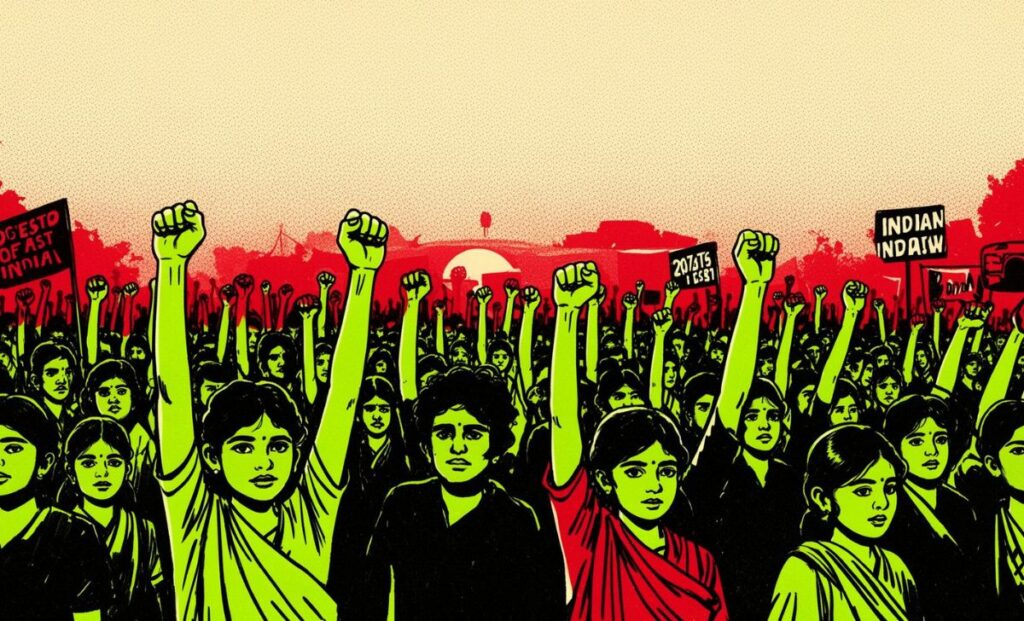
In what is rapidly becoming the most unusual cross-border phenomenon in modern South Asian history, the digital wildfire known as the Cockroach Janata Party (CJP) has breached international boundaries. Within days of overtaking India’s mainstream political parties in social media metrics, the insect-themed satirical movement has mutated into a localized Pakistani trend, giving rise to the Cockroach Awami Party (CAP) and the Cockroach Awami League (CAL).
What began as an impulsive response to a controversial remark by India’s Chief Justice has officially evolved into a transnational Gen-Z subversion strategy, turning the humble cockroach into a universal symbol of youth resilience against broken economic systems.
The Birth of the ‘Awami’ Counterparts
The expansion into Pakistan was not orchestrated by CJP’s Boston-based Indian founder, Abhijeet Dipke. Instead, it was an act of organic, cross-border digital imitation.
On Thursday night, an Instagram page operating under the banner of the Cockroach Awami Party surfaced with a green-and-white color scheme, explicitly acknowledging its source material. Its bio reads with characteristic Gen-Z flippancy:
“Yeah copied but who cares. Motto is same.”
Within hours, auxiliary pages sprouted across X (formerly Twitter) and TikTok. One page declared its arrival with the Urdu slogan:
“Jinhein system ne cockroach samjha, hum unhi awaam ki awaaz hain” (Those whom the system deemed cockroaches, we are the voice of those very people). Another group, calling itself the Cockroach Awami League, adopted the battle cry: “Har halaat mein zinda hain” (We survive under all conditions).
Unlike the Indian original—which features a structured manifesto, a centralized website, and over 400,000 formal sign-ups—the Pakistani offshoots are currently highly fragmented. Multiple independent content creators are launching their own local branches, focusing their satire heavily on Pakistan’s dominant political dynasties: the PML-N, the PPP, and the polarized political landscape surrounding the PTI.
Shared Trauma: Why the Satire Resonates
Political analysts note that the rapid cross-border adoption of the trend highlights deep, shared structural anxieties among youth in both nations. While the Indian movement was triggered by an insult, its fuel is a severe youth employment crisis. In Pakistan, where hyperinflation, soaring utility bills, and high youth unemployment have plagued the economy, the ground was uniquely fertile for a humor-based anti-establishment outlet.
Like the CJP, the Pakistani variants use dark humor and self-deprecation to critique major structural issues. They celebrate “resume gaps,” mock corporate hiring practices, and satirize the perceived failures of state institutions to cater to the young.
| Feature | India’s Cockroach Janata Party (CJP) | Pakistan’s Cockroach Awami Party (CAP) |
| Origin | Triggered by CJI’s “cockroach” remarks on May 16, 2026. | Inspired by CJP’s viral success on May 21, 2026. |
| Structure | Centralized leadership (Abhijeet Dipke), structured website, trademark applications. | Fragmented, decentralized, multiple independent meme creators. |
| Core Targets | Indian establishment, mainstream media (“Godi Media”), judicial appointments. | Pakistani political dynasties (PML-N, PPP), hyperinflation, economic systemic failure. |
| Symbolism | The cockroach as an un-killable, resilient survivor of systemic contempt. | Same regional symbolism, customized with localized green-and-white motifs. |
Geopolitical Friction and ‘Bot’ Allegations
The phenomenon has not risen without significant controversy. As the Indian CJP’s Instagram following skyrocketed past 15 million—eclipsing the ruling BJP’s digital footprint—right-wing commentators in India alleged that the movement’s rapid growth was artificial.
On Thursday, several prominent X accounts shared alleged audience analytics claiming that up to 63% of the CJP’s followers were located outside India, specifically citing Pakistan and Bangladesh, implying a foreign state-sponsored digital operation.
CJP founder Abhijeet Dipke aggressively countered these claims on social media, releasing internal dashboard data indicating that 94% of the account’s engagement originates directly from Indian youth.
The geopolitics turned material on Thursday when the Indian government ordered X to withhold the official CJP account within India, citing potential national security threats—a move that only fueled the party’s narrative of resilience. The creators immediately bounced back under a new handle, typing: “You thought you can get rid of us? Lol.”
Digital Subversion or Fleeting Fad?
As the “Cockroach Fever” spreads across South Asia, regional socio-political observers are drawing cautious parallels to recent youth-led movements in nearby nations, such as the major political shakeups seen in Bangladesh and Nepal.
While Dipke has explicitly stated that the CJP operates strictly within constitutional boundaries and does not aim to replicate chaotic street disruptions, the cross-border duplication of the meme-party template suggests that Gen-Z has discovered a new, highly contagious language of political dissent.
Whether the Cockroach Awami Party in Pakistan will consolidate into a structured pressure group or dissolve as a temporary digital trend remains to be seen. However, for now, the message from the region’s youth is clear: like the insect they have chosen to represent, their grievances are proving impossibly difficult to suppress.